You already know this food. Here is a way to sell it.
A convenience store format for small towns across Canada. Two revenue lines under one roof, a hot Vietnamese counter and a retail shelf, designed to be run by one person with no restaurant background.
- 2
- revenue lines under one roof
- 3 minutes
- from freezer to served
- 387
- products in the supply base
- 3
- dayparts the counter trades
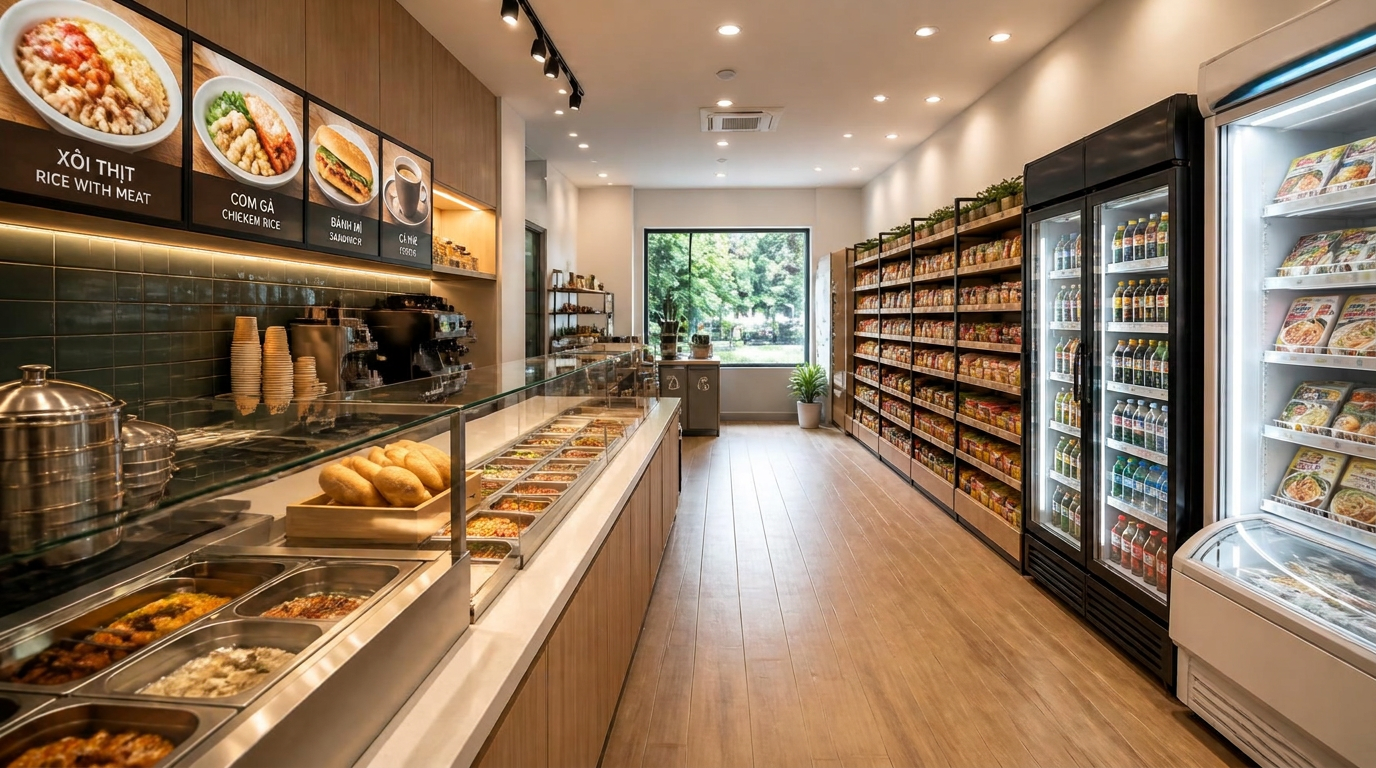
Cheap, easy, fast enough to serve, easy enough to run.
The last clause is the binding constraint, not a marketing claim. Any product or process that fails the ease-of-operation test does not enter the system.
Two revenue lines
The format runs two revenue lines in the same footprint.
One counter, one shelf, one supply line and one person able to run both.
Hot ready-to-eat counter
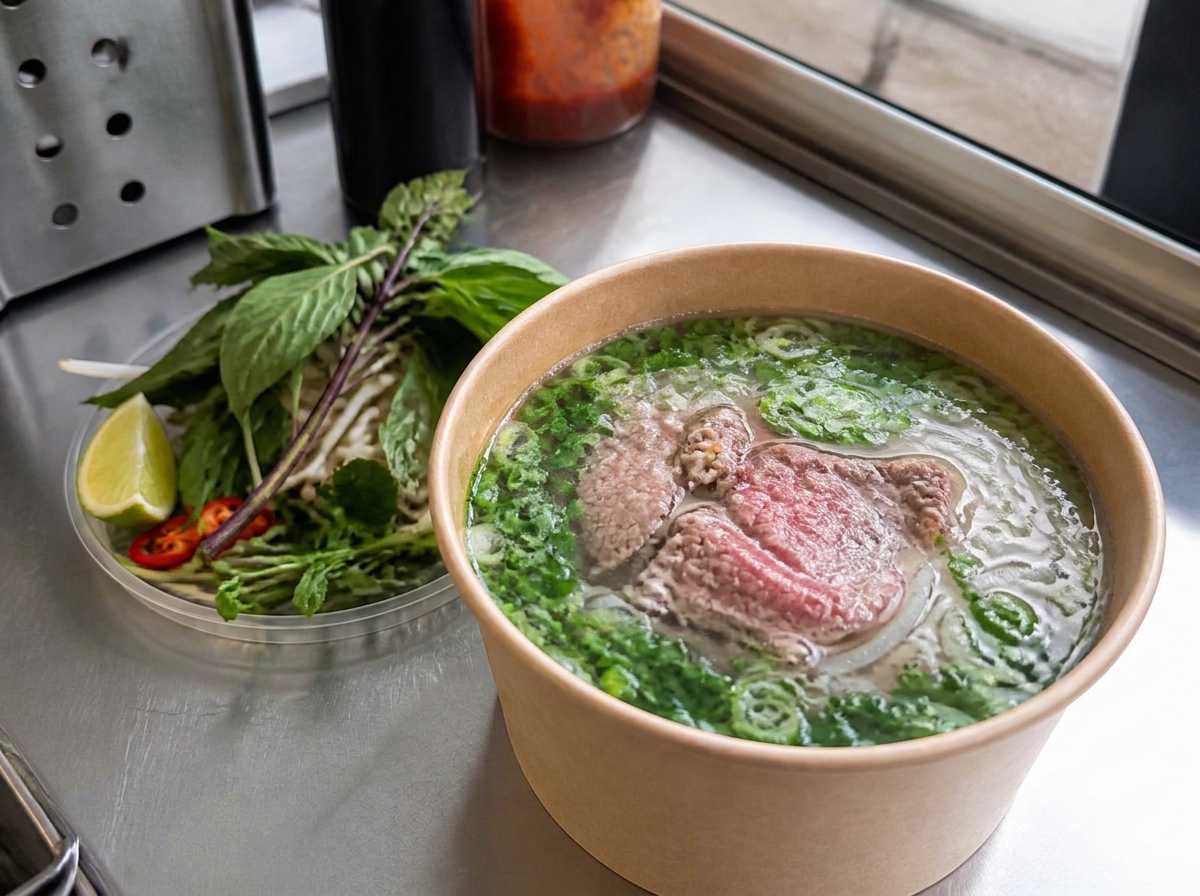
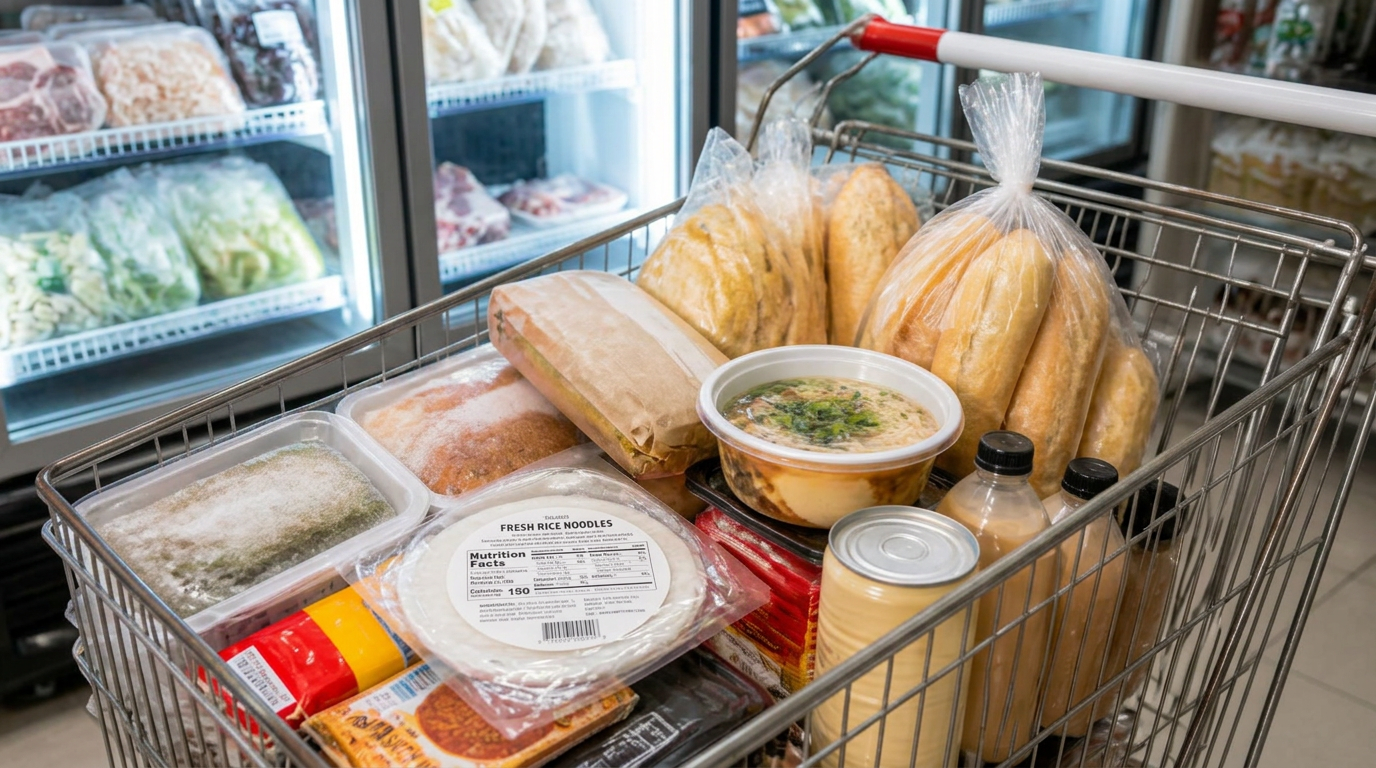
Vietnamese dishes supplied packaged frozen or chilled, finished in store by reheating or assembly. No scratch cooking at store level.
Convenience retail shelf
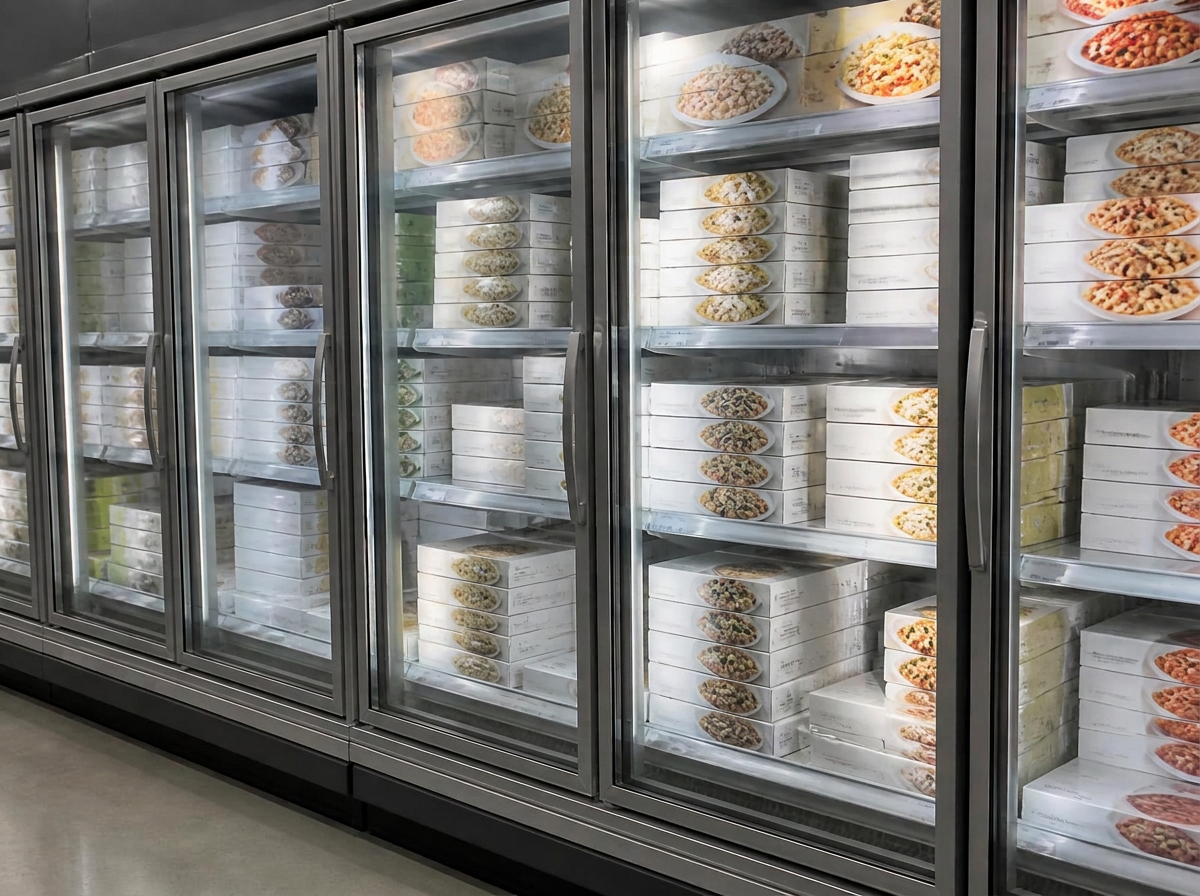
Frozen imports of the same dishes, plus local staples, drinks and everyday convenience lines.
Why this is one business and not two
Every hot serve is a paid sample of a product sitting in the freezer a few feet away. The counter generates the traffic. The shelf carries the fixed costs and grows the basket.
The Logic
One Footprint / Two Revenue Lines
Hot ready-to-eat counter
Generates the traffic
Convenience retail shelf
Carries the fixed costs
One footprint
One operator, one stockroom, one fixed cost base.
Every hot serve is a paid sample of a product sitting in the freezer a few feet away.
The customer changes what goes in the bag, not the habit
This is not an attempt to introduce frozen food to a small town. Every town already buys frozen dinners weekly. It is the same category, the same shelf, the same convenience and a comparable price, with an assortment nobody else in the market sells.
A day on the counter
Breakfast, lunch and dinner traffic — from one small hot counter.
In Vietnam the convenience store is where the town eats. Coffee and bánh mì in the morning, hot bowls at lunch, a meal plus the groceries on the way home. Every serve is reheated or assembled, never cooked from scratch.
Morning
Coffee, bánh mì, xôi.
Something hot in hand in under two minutes, for people already on their way somewhere.
Midday
The lunch peak.
Ready-to-eat bowls and rice plates come up from the same supply the shelf sells.
Evening
Meal plus groceries.
The counter sells dinner; the shelf sells what goes with it. That second basket is the format.
Supply base — food catalogue
- 387
- Products available
- 84
- Brands
- 12
- Categories
- $5.50
- Median unit price
- 317 / 35 / 35
- Ambient / chilled / frozen
The shelf and the counter are drawn from the same catalogue, so a store never has to source or negotiate. What a town buys decides what it carries next.
Browse the assortmentA day in the store
Short, repeatable, boring in the best way.
No scratch kitchen, no purchasing calls, no menu decisions at 6am. A rhythm an owner and one team member can hold every day.
07:00
Open
Heat on, hot case filled, coffee running. Selling within thirty minutes of unlocking.
11:30
The rush
Two hours carry the day. Everything is portioned already, so the job is speed.
15:00
Reset
Walk the shelf, check chiller and freezer, send the reorder. A list, not a decision.
20:00
Close
Clean, count, lock. Tomorrow starts from the same known state.
Add-on, included in the package
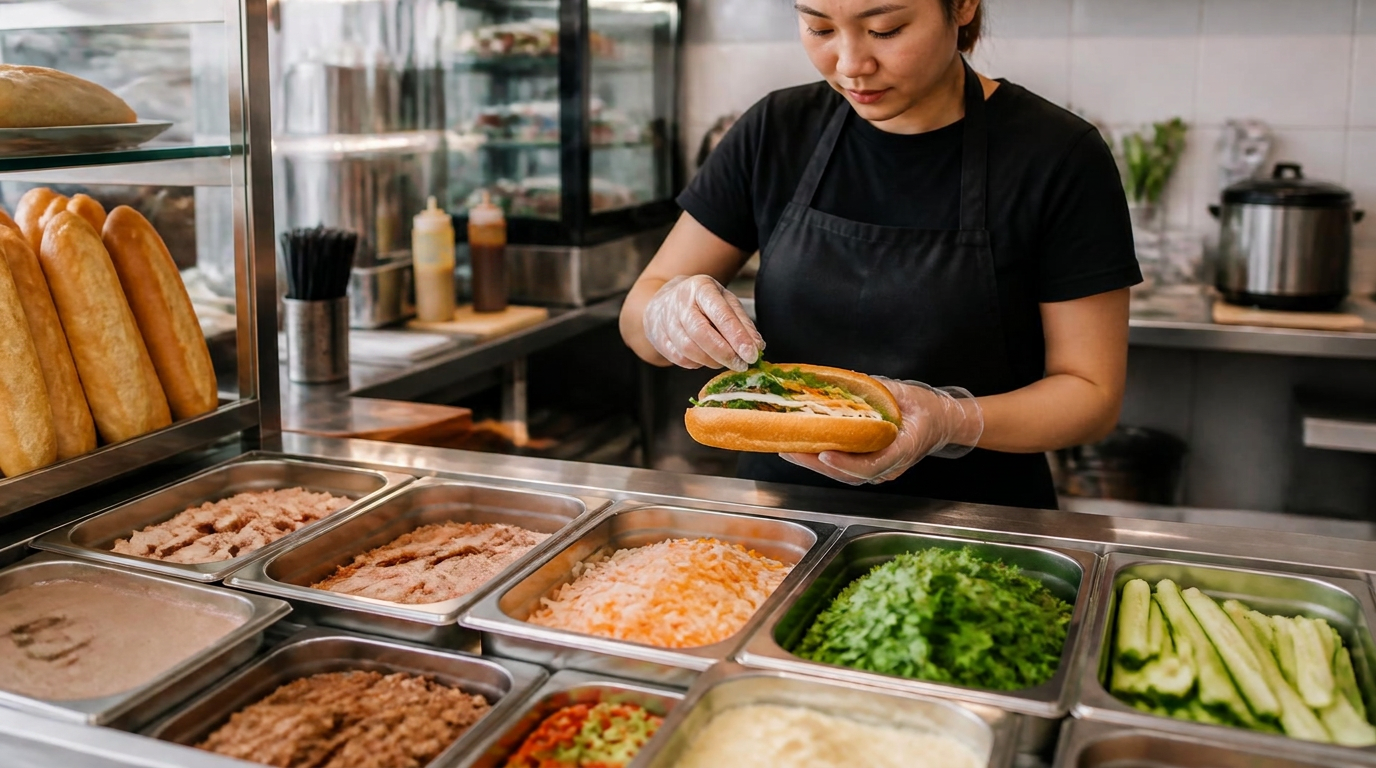
A full bánh mì counter, for the stores that want one.
Fresh baguettes, ingredient wells and an assembly workflow built for speed. Same supply chain, same footprint, no extra headcount.
What we sellWhat you do not need
The format assumes an operator with no food service background.
It is built for a town with a thin hiring pool, where every task has to be trainable on day one.
- A quick-service restaurant background
- Knife skills
- Scratch cooking
- Recipe judgement
- Purchasing experience
- A local hiring pool with hospitality experience
Any product or process that fails the ease-of-operation test does not enter the system.
How the process runs
Five steps, no pressure at any of them.
Fees, total investment and territory terms are not published here — they belong in the disclosure document, with the detail and the legal protection behind them.
- 01
You apply.
Who you are, and which town you have in mind.
- 02
We talk.
The town, the site, and what you are looking for.
- 03
We share the detail.
Fees, terms and territory arrive in a franchise disclosure document.
- 04
You take your time.
At least 14 days with that document, in every province, before anything is signed.
- 05
We open.
Site, fit-out, opening stock and training.
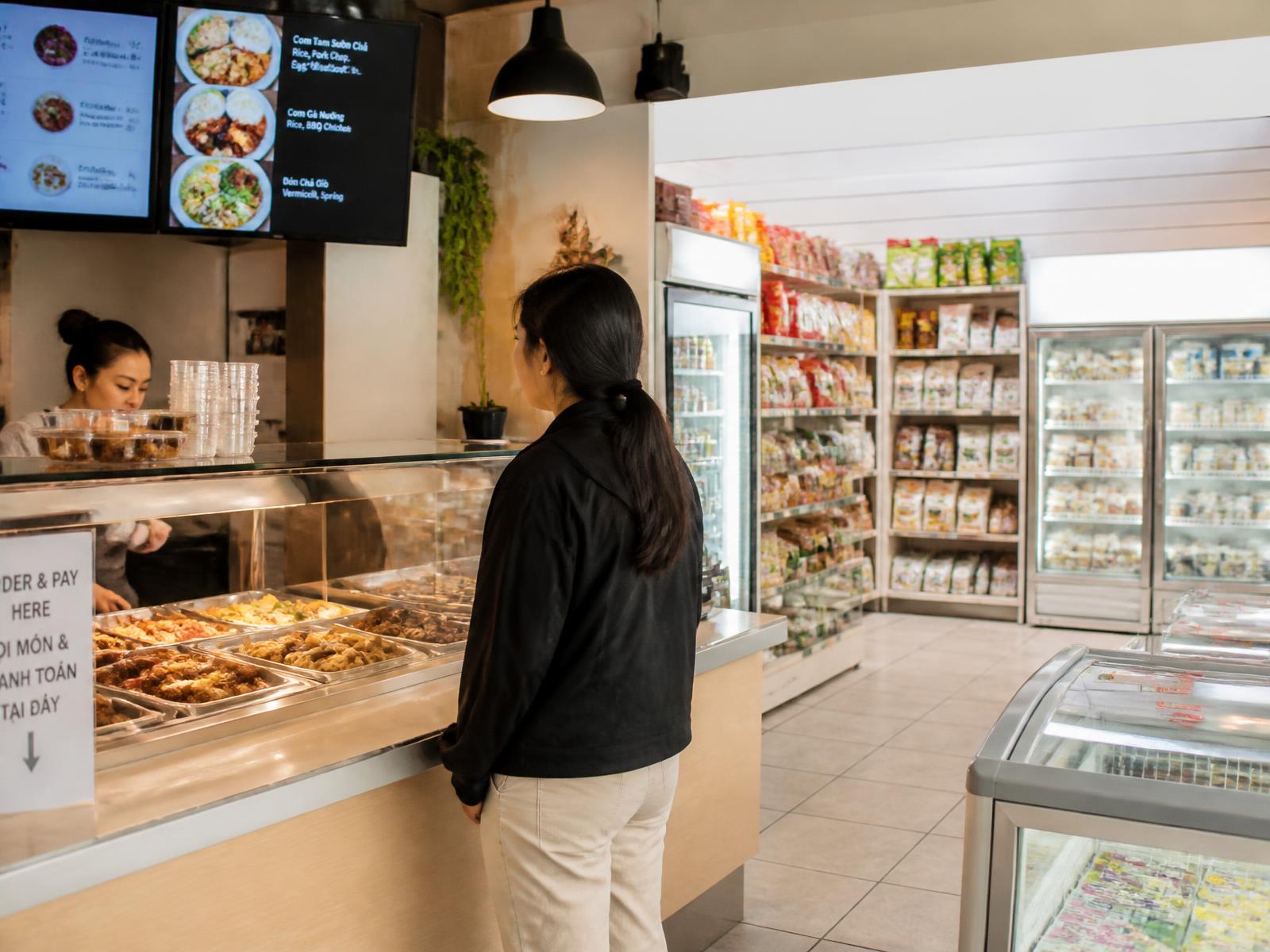
The rest is a conversation about your town.
The franchiseWhich town are you thinking about?
Tell us who you are and where you have in mind. We will come back to you with the detail.
Apply