
A day in the store
Before the numbers, this is the part people ask about: what does it actually feel like to run one?
The store is designed so the routine is short, repeatable and boring in the best way.
Small-town retail fails when the day is complicated. So the format removes the complicated parts: no scratch kitchen, no purchasing calls, no menu decisions at 6am.
What remains is a rhythm an owner and one team member can hold every day of the week.
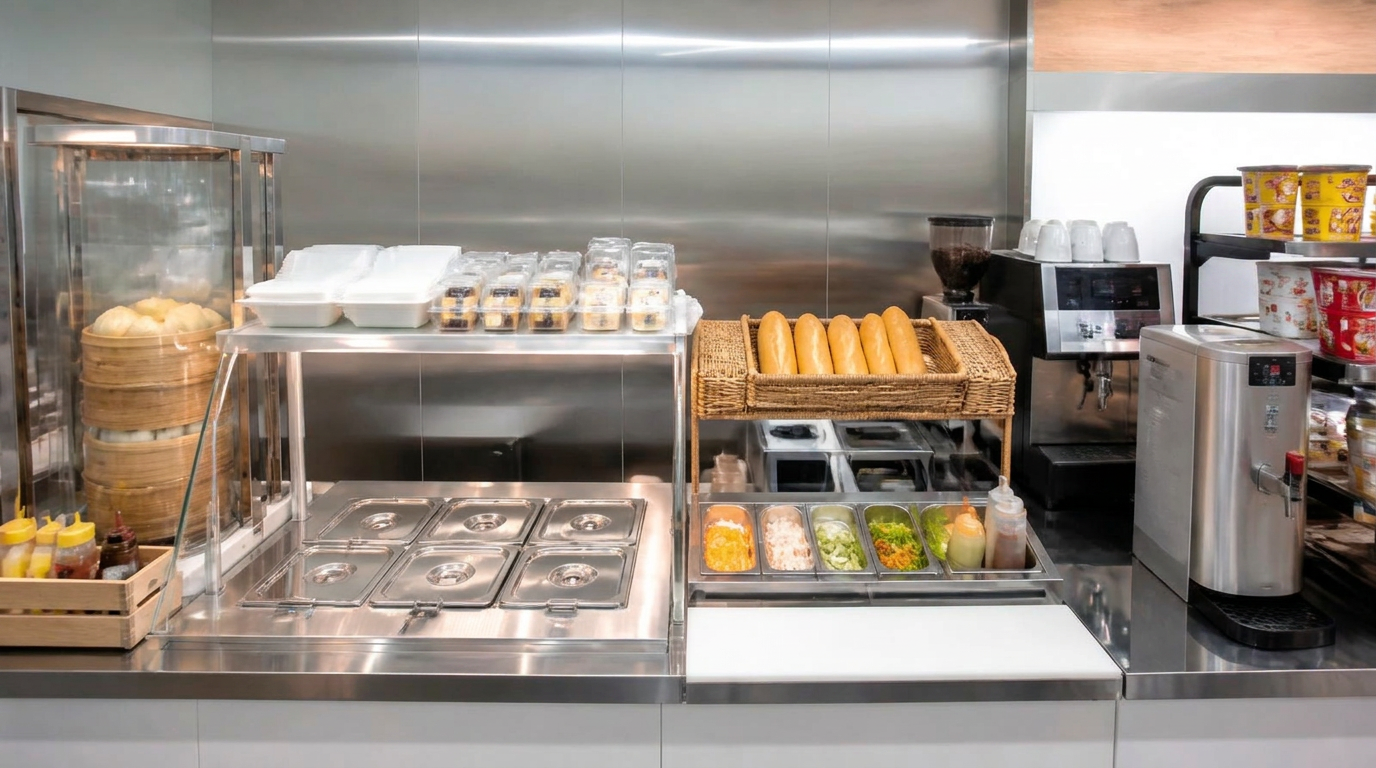
The rhythm
- 07:00Open
The counter comes up first.
Heat goes on, the hot case is filled, coffee is running. One person can have the store selling within thirty minutes of unlocking the door.
- 11:30The rush
Two hours carry the day.
Lunch is the peak. Everything is already portioned, so the job is serving people quickly and keeping the case full — not cooking to order.
- 15:00Reset
Shelves get walked, not managed.
A short afternoon loop: face the shelf, check the chiller and freezer, scan what sold, send the reorder. It is a list, not a decision.
- 20:00Close
Clean, count, lock.
Simple close-down. The next morning starts from the same known state, which is what makes the routine trainable.
Your role
The owner runs the store. The system runs the food.
What the job is, and just as importantly, what it is not.
You are a shopkeeper
Your job is presence, service and consistency — being open, being fast and being the place the town relies on.
Not a chef
No scratch cooking, no recipe judgement, no knife skills. Food arrives prepared; the store reheats or assembles it.
Not a buyer
You do not source, negotiate or guess. The assortment, pricing and reorder list come with the system.
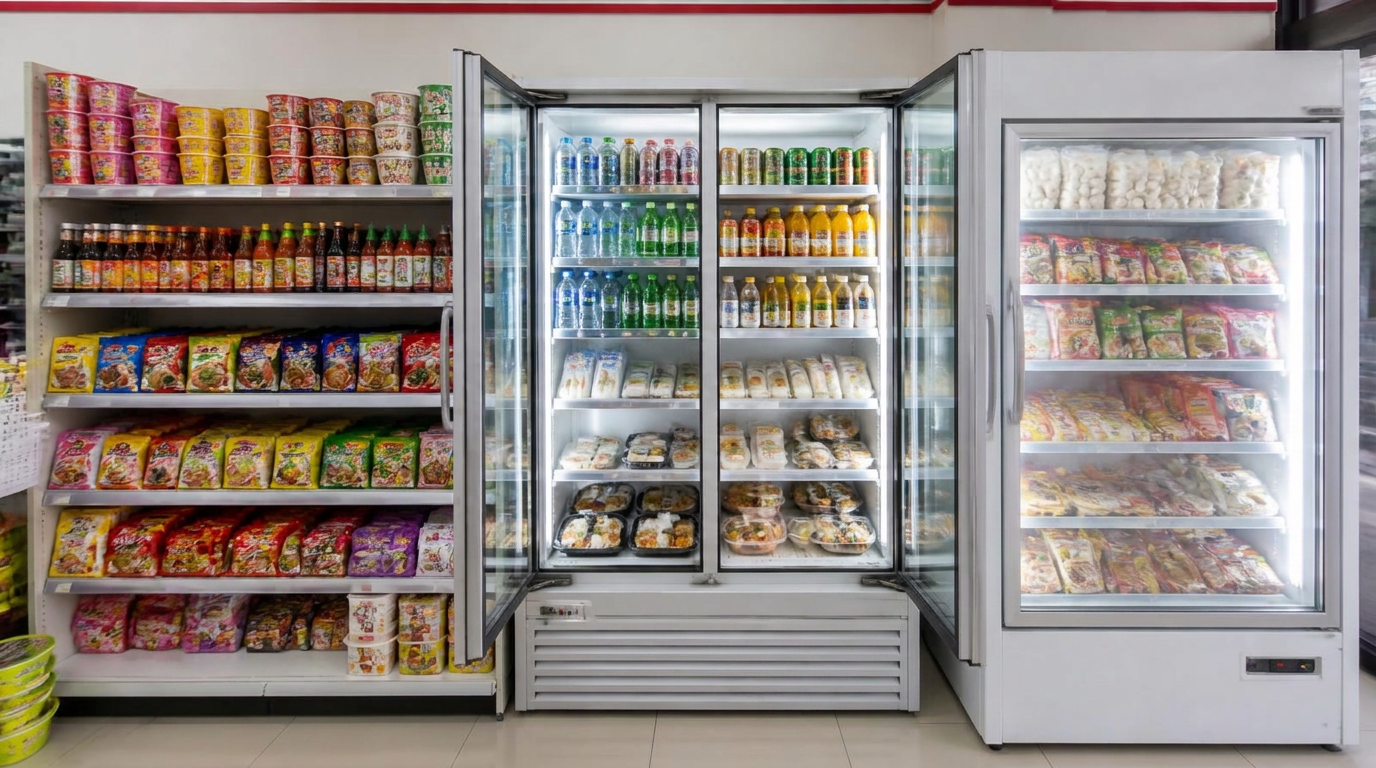
The shelf side
Stock is a list you work, not a business you learn.
Ambient, chilled and frozen are already mapped to the fixtures. You walk the shelf, mark the gaps and send the order. The range evolves centrally, so the store never has to guess what to carry next season.
What you get behind you
Setup
Fit-out guidance, equipment specification and the opening assortment for your footprint.
Training
A new hire is productive on day one because every task is a single, timed step.
Supply
One supply line for hot counter and shelf, with a reorder list that follows what actually sold.
Ongoing
Seasonal range changes, food-safety records and a person to call when something breaks.
Which town are you thinking about?
If the routine above sounds like something you could hold six days a week, the rest is a conversation about your town.
Apply