The format
An Asian convenience store format, scaled down for small towns.
Two revenue lines
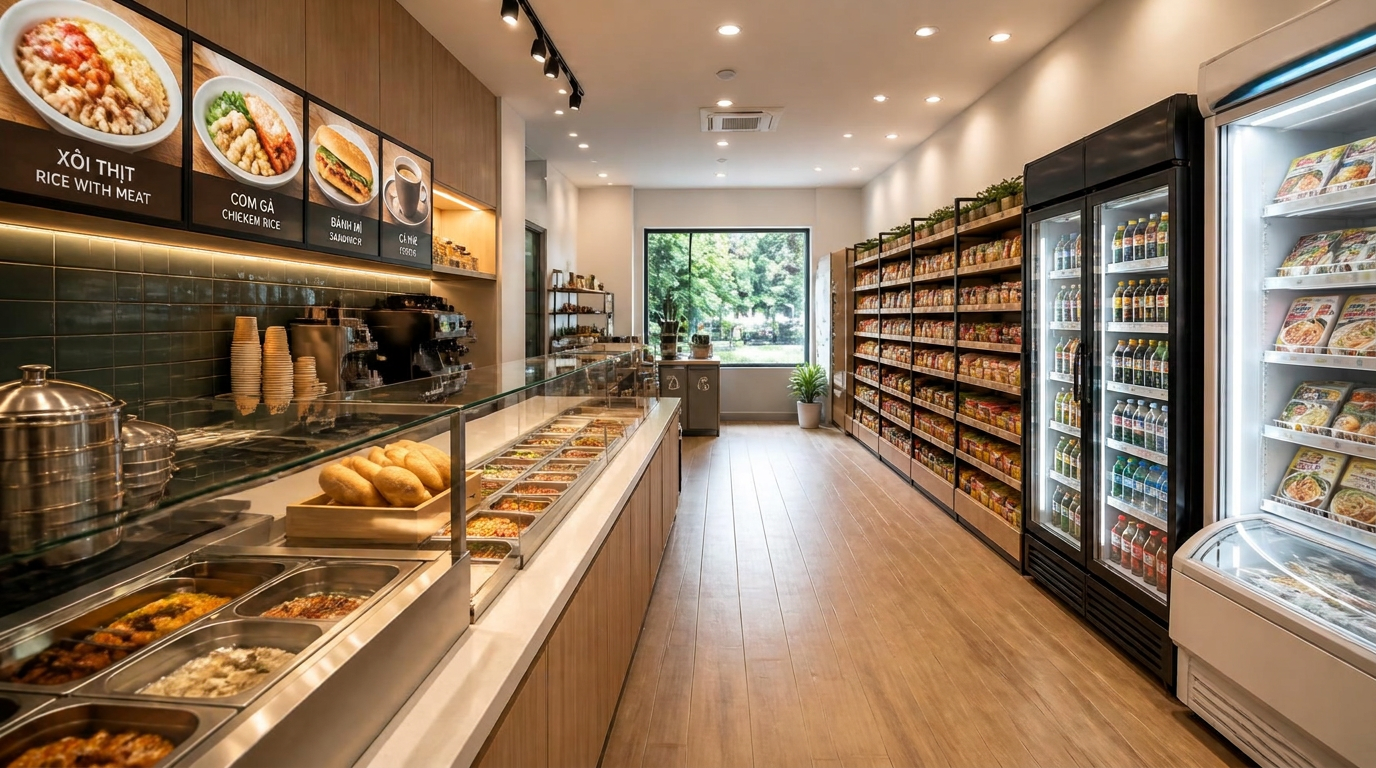
The format runs two revenue lines under one roof.
A hot counter that earns the visit, and a retail shelf that earns the basket.
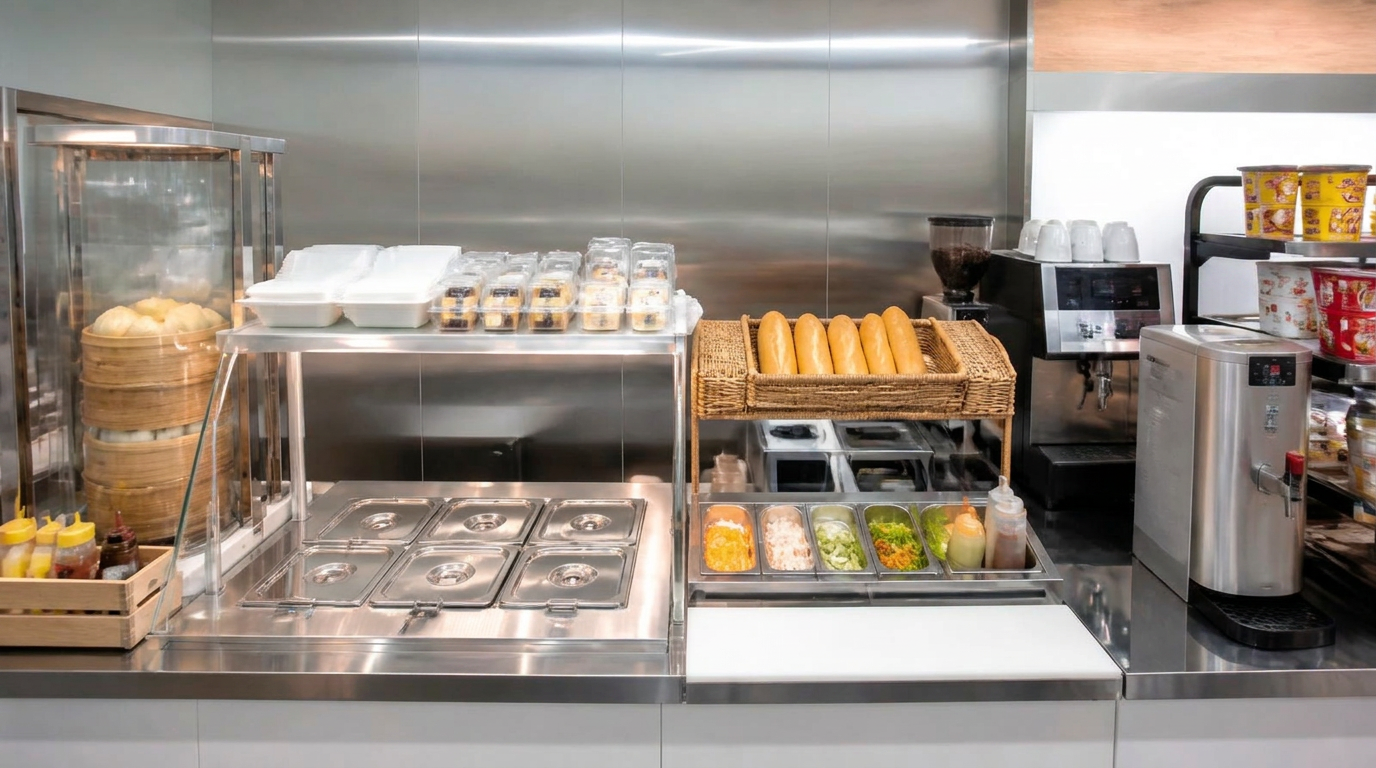
Hot ready-to-eat counter
Vietnamese dishes supplied packaged frozen or chilled, finished in store by reheating or assembly. No scratch cooking at store level.
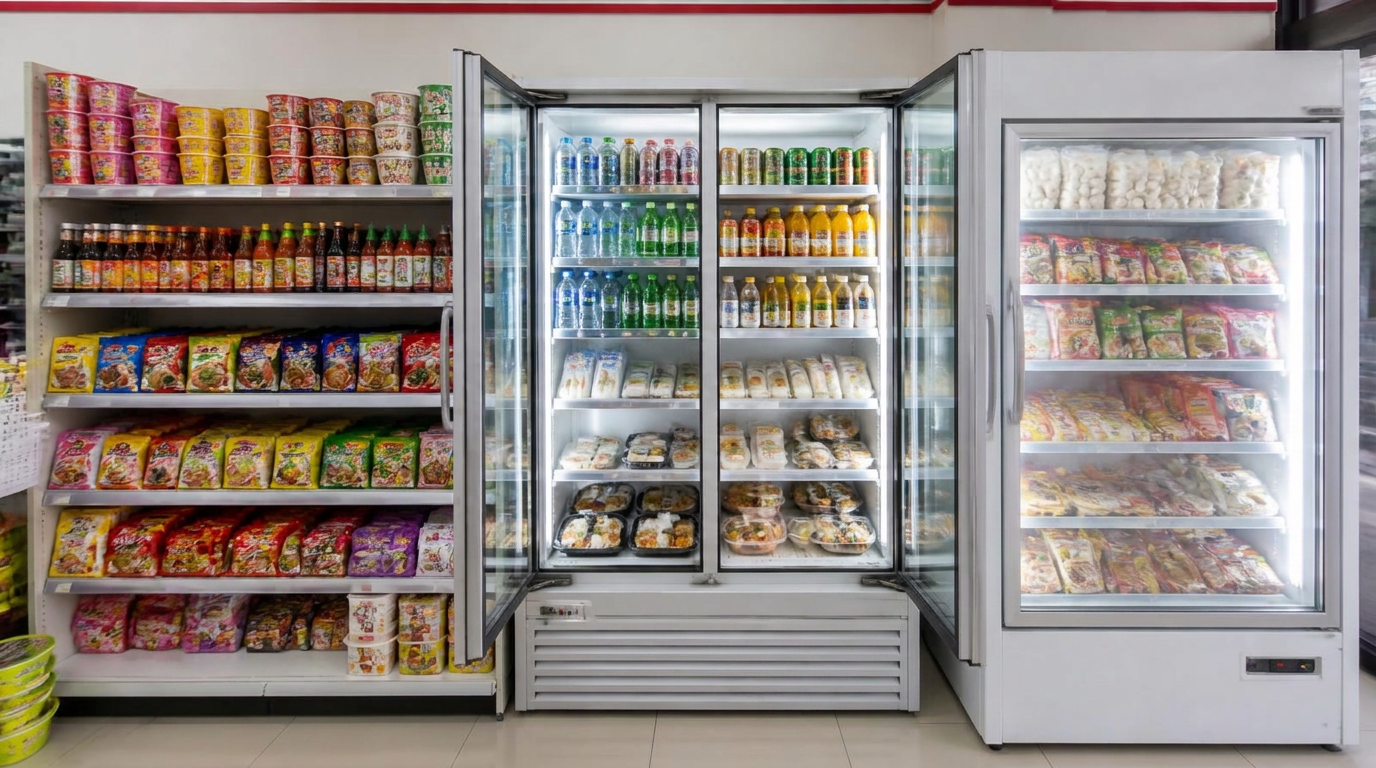
Convenience retail shelf
Frozen imports of the same dishes, plus local staples, drinks and everyday convenience lines.
The Logic
One Footprint / Two Revenue Lines
Hot ready-to-eat counter
Generates the traffic
Convenience retail shelf
Carries the fixed costs
One footprint
One operator, one stockroom, one fixed cost base.
Every hot serve is a paid sample of a product sitting in the freezer a few feet away.
The link between them
The link between the two lines is what makes this one business rather than two tenants sharing a room.
Every hot serve is a paid sample of a product sitting in the freezer a few feet away. The counter generates the traffic. The shelf carries the fixed costs and grows the basket.
Category position
This is not an attempt to introduce frozen food to a small town. Every town already buys frozen dinners weekly.
It is the same category, the same shelf, the same convenience and a comparable price, with an assortment nobody else in the market sells. The customer changes what goes in the bag, not the habit.
The binding constraint
Cheap, easy, fast enough to serve, easy enough to run.
The last clause is the binding constraint, not a marketing claim. Any product or process that fails the ease-of-operation test does not enter the system.